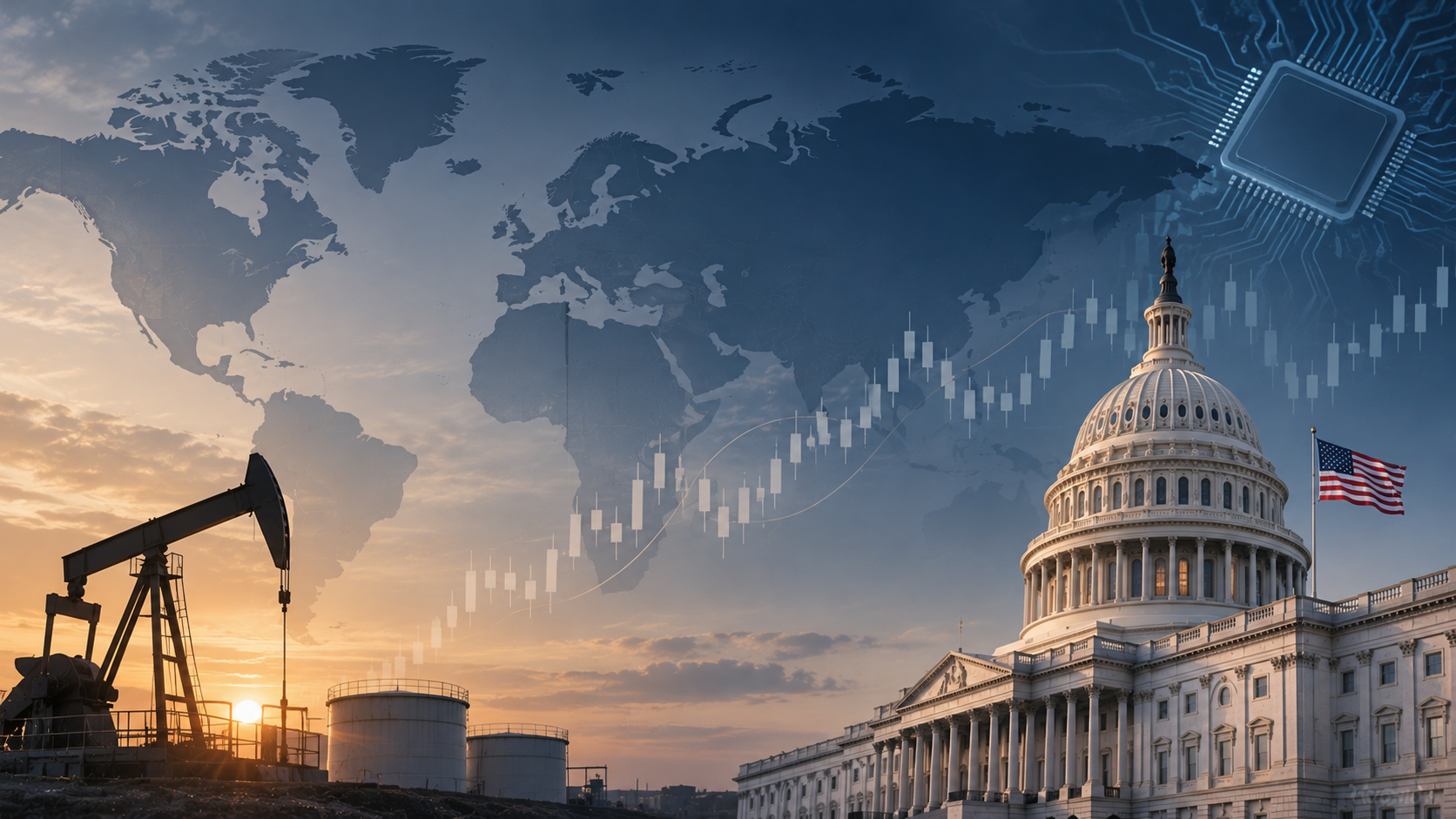
Global equity markets are likely to remain in a holding pattern as investors weigh three key issues: developments in the U.S.–Iran conflict, the sustainability of the AI investment boom, and the Federal Reserve’s interest rate trajectory. Geopolitical tensions continue to influence energy prices, while the rapid expansion of AI infrastructure introduces additional uncertainty around investment returns, electricity demand, and economic growth.
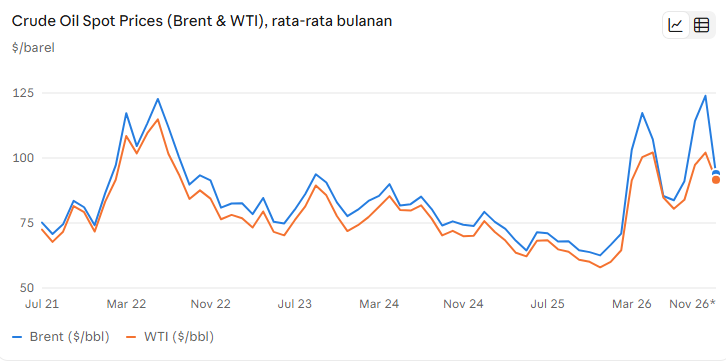
Oil prices have fallen roughly 20% this month, with Brent down about 21% and WTI about 18%, as recovering Middle Eastern exports and the prospect of a global supply surplus weigh on the market. Even so, the outlook remains fragile. Shipping through the Strait of Hormuz is still disrupted and tanker attacks continue, while the path of the U.S.–Iran conflict hinges on whether Washington chooses to escalate or de-escalate. Democratic gains in the midterms are unlikely to change this quickly, as the president holds broad authority over foreign policy and congressional efforts to restrain military action face political and legal obstacles. Lower oil prices may ease inflationary pressure, but any renewed escalation could quickly reverse the decline and bring back price spikes.
AI investment is also facing growing political and infrastructure challenges. Regulatory initiatives in Texas, a major data center hub, could increase scrutiny over permitting, energy consumption, and infrastructure requirements. Lawmakers are also considering proposals that would require data centers to bear more of the costs associated with additional electricity demand and grid capacity, potentially raising the cost of AI expansion. At the same time, Kevin Warsh has highlighted AI’s potential to support productivity and long-term economic growth, while warning that disappointing returns on substantial infrastructure investments could trigger valuation corrections and broader economic weakness.
These developments add complexity to the Fed’s policy outlook. U.S. wholesale inflation rose 6.5% YoY in October, marking its largest annual increase since November 2022. Meanwhile, consumer inflation climbed to 4%, exceeding the Fed’s 2% target. Persistent price pressures, energy volatility, and potential labor market disruptions from AI adoption could limit the scope for monetary easing. At the same time, our estimates suggest that a one-percentage-point increase in discount rates could reduce hyperscalers’ intrinsic value by at least 20%.