
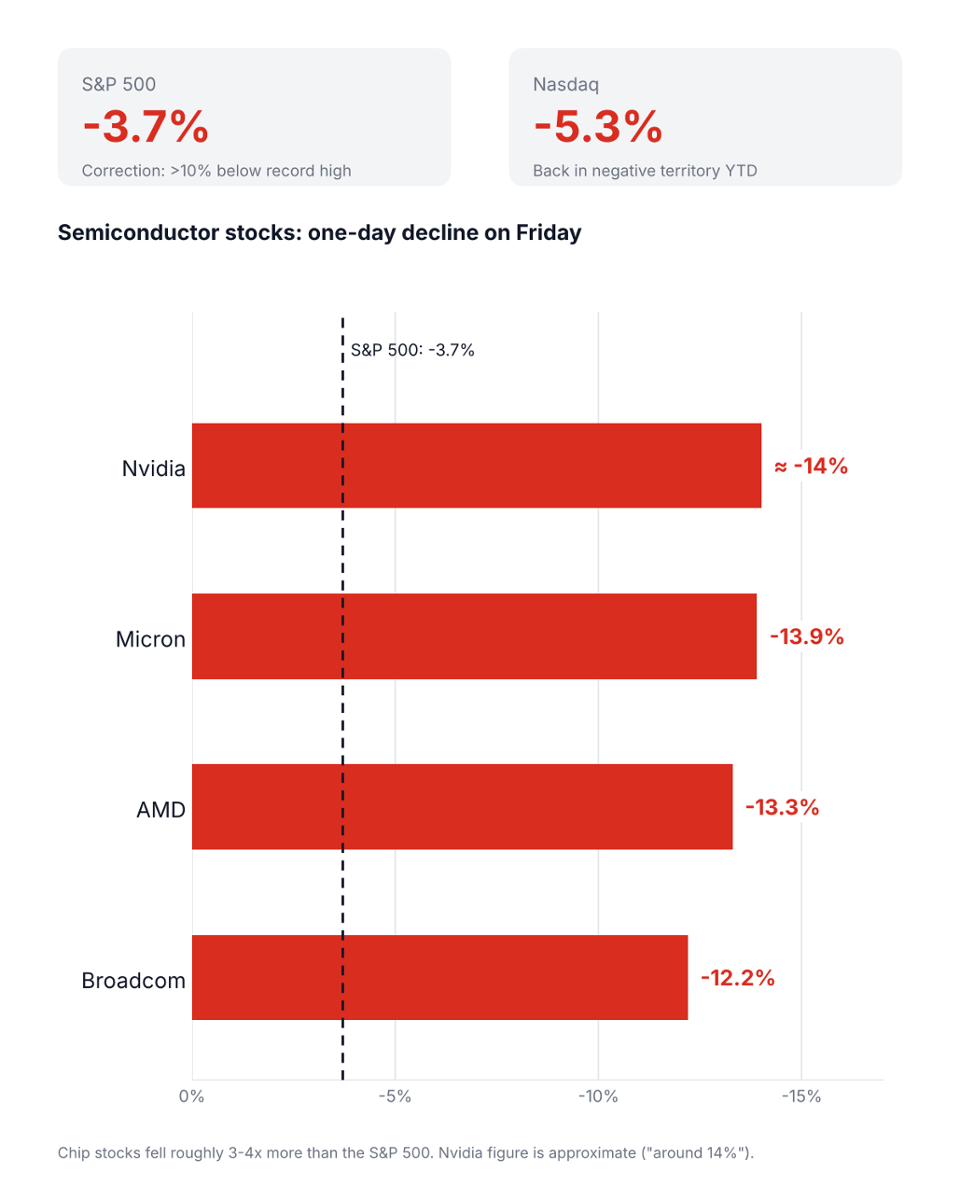
Global markets sold off sharply on Friday (Nov 20) as investors reassessed elevated technology valuations, AI-related spending and the outlook for interest rates. The Nasdaq dropped 5.28%, while the S&P 500 fell 3.70%, with semiconductor stocks leading the decline. The sell-off reflected growing concerns that heavy AI spending and stretched valuations are hard to justify amid higher borrowing costs and uncertainty over future corporate returns.
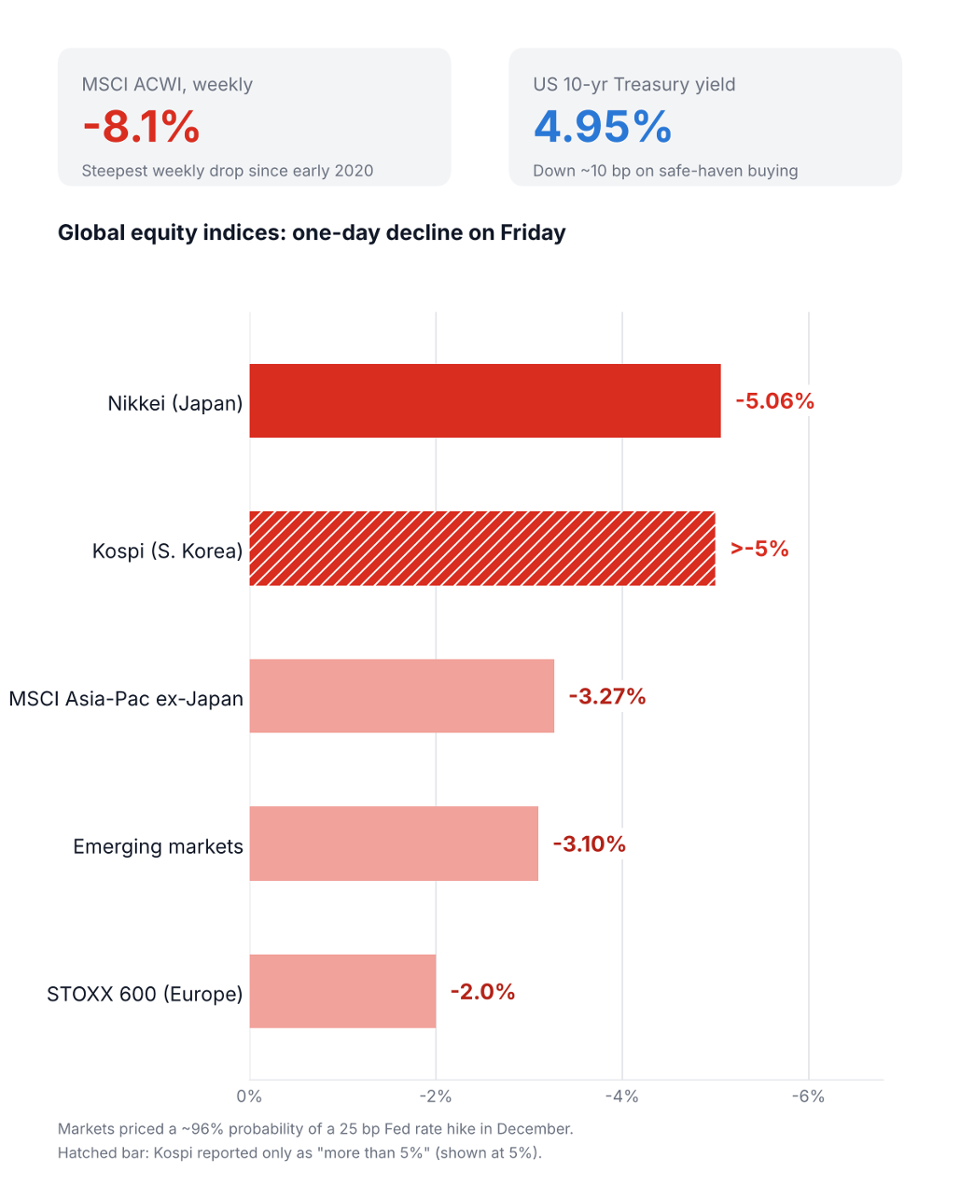
The weakness also weighed on Asian markets, with Japan and South Korea falling more than 5%. The broader MSCI global equity index recorded an 8.1% weekly decline, its steepest drop since early 2020. Meanwhile, US Treasury yields moved lower as investors sought safe-haven assets, with the 10-year yield declining to 4.95%, even as markets continued to price in a Fed rate hike in December.
Domestically, the IHSG fell 0.92% to 5,146.32 on Friday, bringing its weekly decline to 3.71%, with net foreign selling of about Rp2.6 trillion. The rupiah weakened to around Rp18,270/USD. Bank Indonesia raised its policy rate by 25 bps to 6.00% on Nov 18 to support the rupiah, though higher rates may also weigh on equity valuations. Together with persistent foreign outflows and tighter global monetary conditions, this continues to challenge domestic equity valuations.
On a more constructive note, Bank Indonesia reported that Indonesia's balance of payments returned to a US$0.1 billion surplus in 3Q26, following a US$0.9 billion deficit in the previous quarter. The improvement was supported by a narrower current account deficit, reflecting a stronger non-oil and gas trade surplus. While this provides some support for external resilience, near-term market sentiment is likely to remain sensitive to rupiah movements, foreign fund flows and developments in global technology stocks.