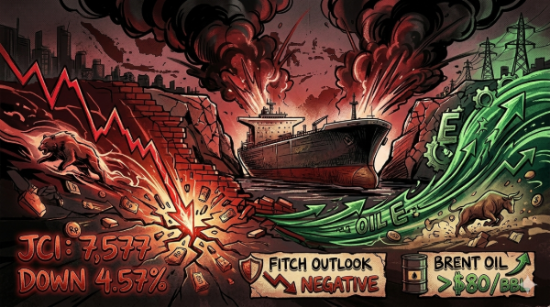
The capital market often tolerates a single piece of bad news, but today reached a saturation point where multiple negative sentiments conspired to test the very limits of investor resilience. At the close of March 4, 2026, the JCI plummeted to 7,577, a drastic 4.57% drop in a single session fueled by panic. This was no ordinary technical correction; it was a massive, organized sell-off that left the LQ45 index helpless, sliding 4.11%. Every single sector landed in the red, reflecting an instant evaporation of market confidence as global geopolitical escalations and domestic fiscal credibility shocks hit simultaneously.
The primary trigger for this volatility stems from the closure of the Strait of Hormuz by Iran, which immediately sent Brent crude prices skyrocketing past USD 80 per barrel. As a net oil importer, this surge serves as a dire alarm for burgeoning subsidies, inflationary risks, and heavy pressure on our state budget (APBN). Simultaneously, domestic wounds were deepened by Fitch Ratings' move to revise Indonesia's debt outlook to negative. Although the BBB rating was maintained, this signal of uncertainty prompted foreign investors to hit the exit button, exacerbating a sentiment that had been fragile since the opening bell.
.png)
The most severe damage was seen in the basic materials sector, which slumped 7.39%, followed by transportation and non-primary consumer goods, both down over 6%. These sectors are the "first victims" of rising input costs and the looming threat of weakened purchasing power. Amidst this widespread pressure, only the energy sector moved anomalously, enjoying a brief windfall from the global oil spike. However, the energy sector's resilience was not enough to anchor the index, especially as regional markets like the Kospi and Nikkei suffered heavy bleeding, even triggering a trading halt in South Korea.
.png)
Moving forward, market focus remains locked on two key variables: de-escalation in the Middle East and the central bank's maneuvers to keep the Rupiah stable below the psychological level of Rp17,000. With cumulative foreign net sells reaching Rp20.54 trillion throughout 2026, the market is expected to remain in a defensive posture. Nevertheless, periods of organized panic often create a window for strategic investors to begin scouting blue-chip stocks whose prices have been discounted far beyond their actual fundamental decline.