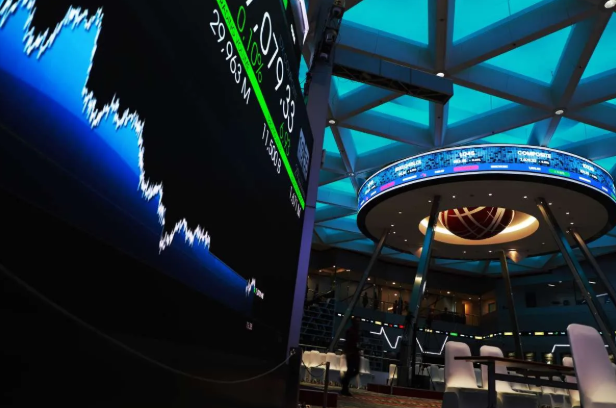
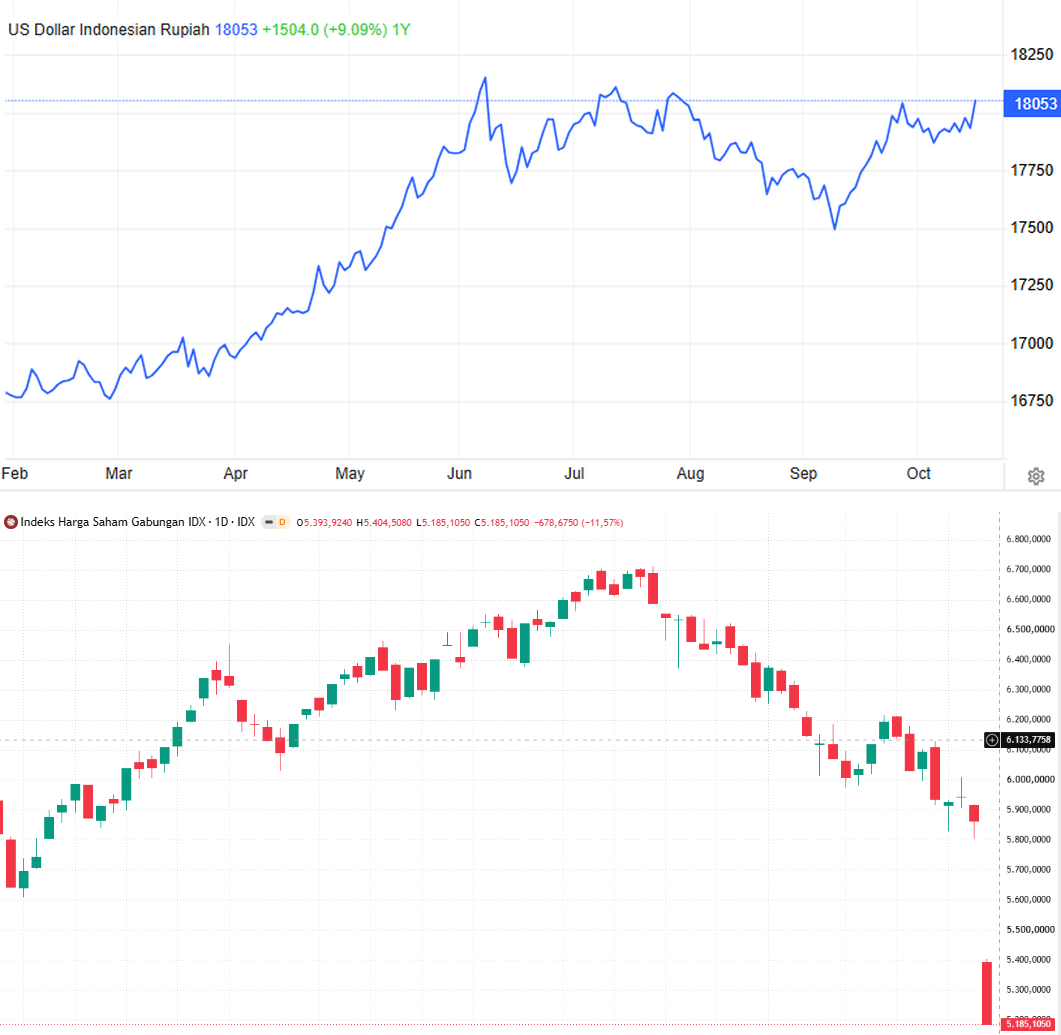
Indonesian equities are likely to remain in a wait-and-see phase as investors assess the potential impact of MSCI’s proposed reclassification of Indonesia from Emerging Market to Standalone Market status. The announcement triggered a sharp sell-off, with the IHSG plunging 11.57% to 5,185.11 on Friday, October 16, while the rupiah weakened toward Rp18,000 per US dollar. Concerns over market transparency, free-float quality and accessibility have raised the risk of further foreign capital outflows, with estimates suggesting billions of dollars in potential outflows if the reclassification proceeds. As uncertainty remains unresolved, investors may continue reducing exposure or delaying new positions, keeping market sentiment fragile in the near term.
Historical experiences in Argentina and Russia offer useful but different lessons for Indonesia. Argentina was downgraded to Standalone Market status in November 2021 after prolonged capital controls restricted foreign investors’ access to its equity market. Its stock market subsequently rallied significantly in local-currency terms following Javier Milei’s election in late 2023 and the introduction of economic reforms, although inflation and currency depreciation meant local returns did not translate directly into equivalent US-dollar gains. Russia, meanwhile, was reclassified in March 2022 following the invasion of Ukraine, international sanctions and severe restrictions on market accessibility. MSCI effectively removed Russian equities from its global indexes at negligible prices, illustrating the extreme consequences of disrupted market access. These cases show that a Standalone Market classification does not automatically determine long-term market performance, but the path to recovery depends heavily on economic conditions, policy credibility and investor access.
A rebound in Indonesian equities remains possible if regulatory reforms improve transparency, restore investor confidence and stabilize foreign flows. However, Argentina’s recovery was closely linked to broader economic and policy changes, while Russia represents an exceptional case that cannot be directly compared with Indonesia’s current situation. With MSCI’s consultation ongoing, volatility and further selling pressure cannot be ruled out. We recommend maintaining a cautious stance, prioritizing liquidity and fundamentally resilient stocks, and waiting for clearer signs of stabilization in foreign flows, the rupiah and regulatory developments before taking more aggressive positions.