03 December 2025
Reading Between The Lines of Trade Balance
Market Commentary
0 comments
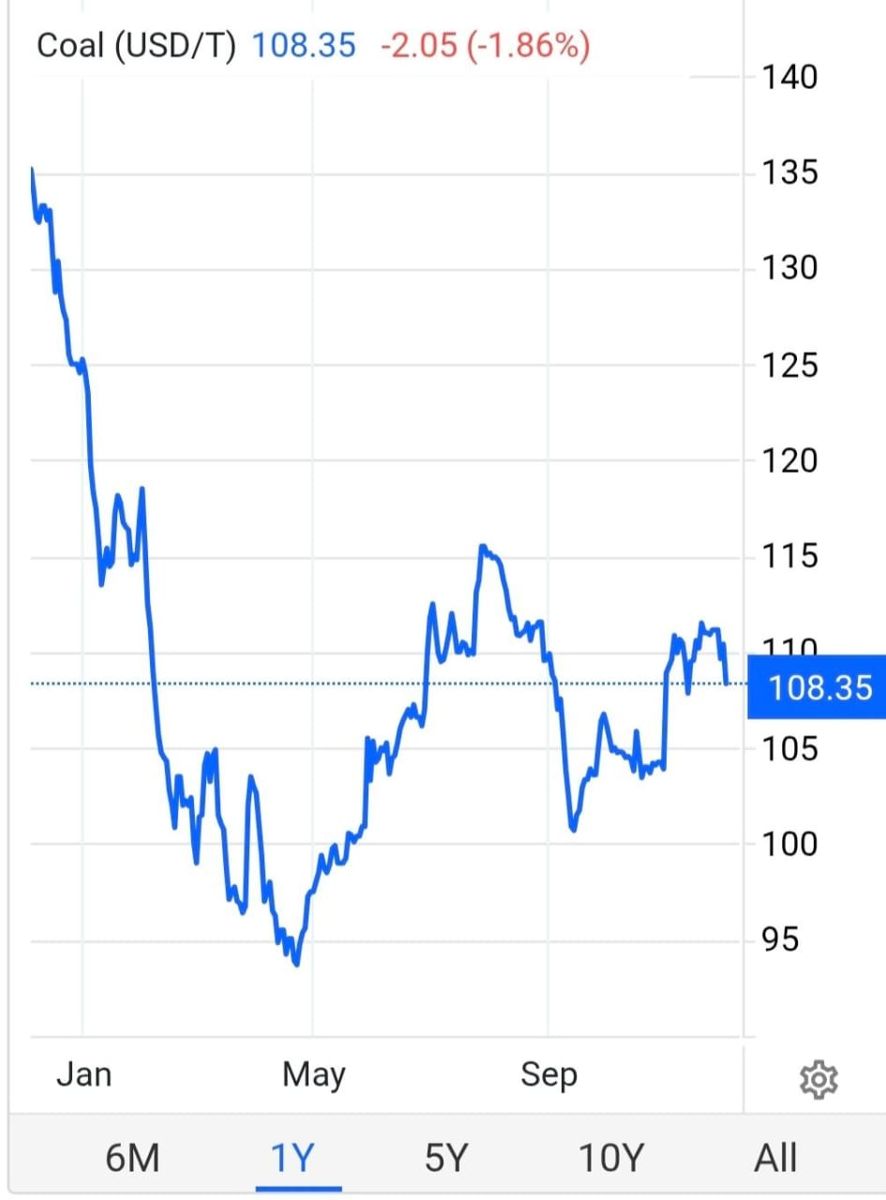
Recent data shows that coal prices c. USD110/ton, while the IEA notes that global demand is flattening and supply remains ample, keeping the market balanced. Coal prices are expected to remain relatively stable over the next six months, hovering around US $100–115/ton.
Coal price seem to have limited upside as demand from major buyers such as China and India softens. With no strong catalysts for a surge, prices are seen moving sideways unless a major supply or geopolitical shock occurs.
Indonesia’s trade balance posted a USD2.40 bn surplus in October, easing from September’s US$4.34bn and undershooting expectations. This marked the 66th straight month of surplus, but momentum softened as both exports and imports lost strength.
Exports fell -2.31% YoY, driven mainly by a sharp drop in coal shipments—Indonesia’s largest export commodity. This aligns with the recent soft outlook for coal prices over the next six months, reflecting weaker global demand and pressure from falling energy prices. Imports also contracted -1.15% YoY, led by declining vehicle and raw material inflows despite a surge in gold jewellery imports.
.jpeg)
Coal price seem to have limited upside as demand from major buyers such as China and India softens. With no strong catalysts for a surge, prices are seen moving sideways unless a major supply or geopolitical shock occurs.
ICE Newcastle Coal Price Chart
Indonesia’s trade balance posted a USD2.40 bn surplus in October, easing from September’s US$4.34bn and undershooting expectations. This marked the 66th straight month of surplus, but momentum softened as both exports and imports lost strength.
Exports fell -2.31% YoY, driven mainly by a sharp drop in coal shipments—Indonesia’s largest export commodity. This aligns with the recent soft outlook for coal prices over the next six months, reflecting weaker global demand and pressure from falling energy prices. Imports also contracted -1.15% YoY, led by declining vehicle and raw material inflows despite a surge in gold jewellery imports.
Indonesia's Trade Balance
Looking forward, export performance may remain constrained in the near term if coal prices stay subdued, which could limit the pace of surplus expansion, especially in months where coal typically acts as a major buffer. However, a potential rebound in gold prices may help partially offset this drag, supporting export recovery toward year-end.
Even with the softer boost from coal, Indonesia’s external position is still expected to stay solid enough to support the rupiah, especially ahead of an anticipated Fed rate cut. Under these conditions, Bank Indonesia may still consider lowering the BI Rate in December, although the downside risk from weaker coal prices could warrant more cautious easing.
Even with the softer boost from coal, Indonesia’s external position is still expected to stay solid enough to support the rupiah, especially ahead of an anticipated Fed rate cut. Under these conditions, Bank Indonesia may still consider lowering the BI Rate in December, although the downside risk from weaker coal prices could warrant more cautious easing.
Written by Boris, the Broker
Comments