
Global markets have shifted decisively into a risk-off regime, driven by a combination of renewed U.S. trade uncertainty and a persistently hawkish monetary backdrop. Risk sentiment deteriorated after Donald Trump revived tariff threats, including a proposed 25% levy on countries maintaining trade ties with Iran. While the policy details remain fluid, the rhetoric alone was enough to reintroduce geopolitical premium into global pricing and accelerate safe-haven demand for the U.S. dollar.
At the same time, expectations that the Federal Reserve will keep policy restrictive for longer have further reinforced USD strength. Sticky inflation dynamics and resilient U.S. macro data continue to limit room for near-term rate cuts, keeping global financial conditions tight and pressuring emerging market assets.
These global pressures quickly transmitted into Asia, triggering broad-based weakness across regional currencies. Capital rotated away from risk-sensitive assets as higher U.S. yields and trade uncertainty raised global risk premiums.
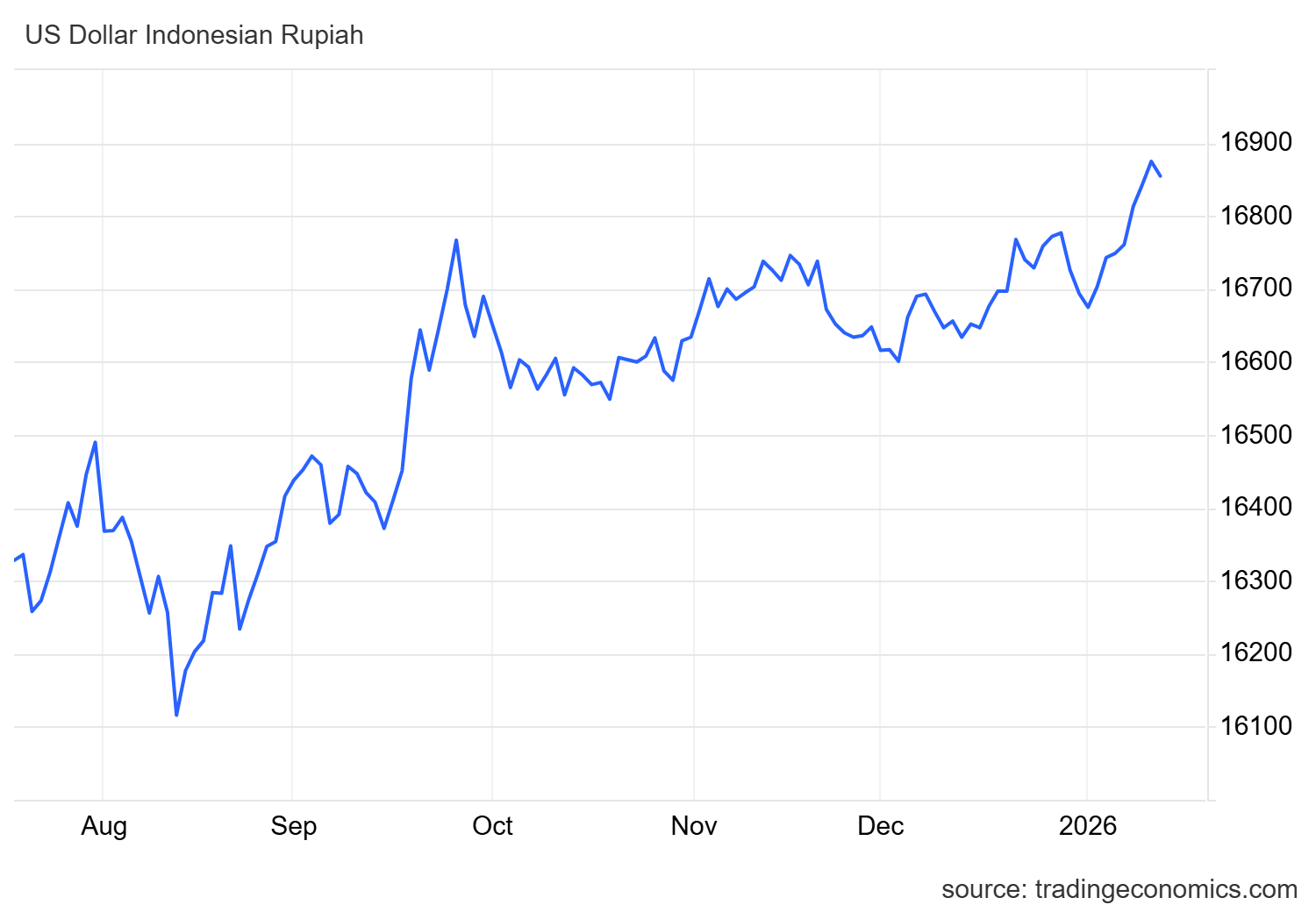
Indonesia has not been immune to this shift. The rupiah slid to a new all-time low, weighed not only by external forces but also by growing domestic concerns surrounding fiscal sustainability. Market participants remain cautious as expectations build that Indonesia’s 2026 budget deficit could edge closer to the upper limit of 3% of GDP, adding another layer of vulnerability amid already challenging global conditions.
In this environment, equity markets are increasingly driven by macro volatility rather than company fundamentals. With FX pressure unresolved, global liquidity still tight, and policy uncertainty dominating headlines, visibility for risk assets remains limited.
As a result, maintaining higher cash allocation and waiting for confirmation appears more prudent than forcing exposure. Preserving flexibility while monitoring stabilization signals — particularly in the currency, U.S. yields, and trade policy clarity — allows investors to manage downside risk while staying prepared for more favorable entry points once macro pressures begin to ease.