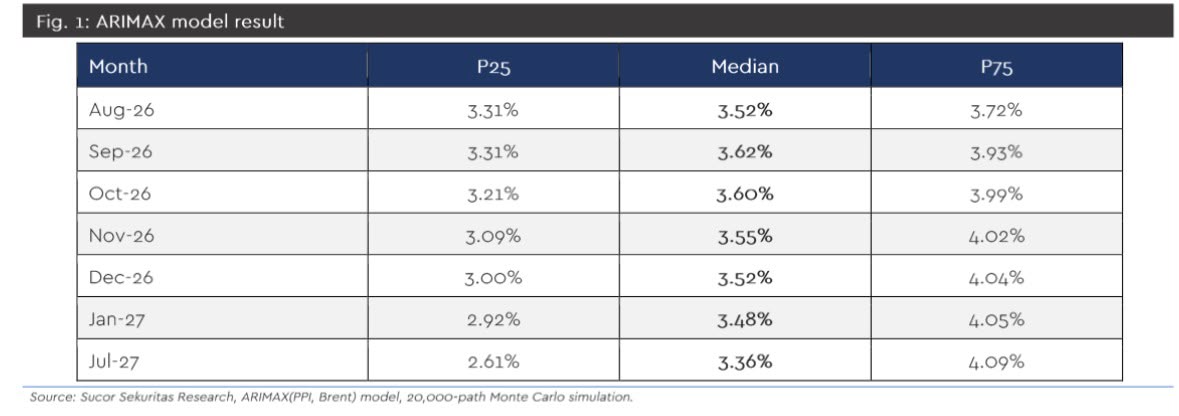
Global markets remain in a risk-off mode as the US–Iran escalation pushes Brent crude above US$100/bbl, raising concerns over renewed inflation pressure and a higher-for-longer Fed. Domestically, our August CPI estimate is at 3.52% YoY vs. 3.4% consensus, as higher diesel prices and PPI pass-through begin feeding into consumer prices. However, we see the current inflation pressure as more of a cost-push energy shock rather than demand-driven overheating, which could give the Fed room to look through the temporary inflation spike.
Our base case remains for the Fed to hold rates at the September 16 FOMC, with our model assigning around 91% probability of no change. A Fed hold, alongside continued balance-sheet expansion and potential TGA-related Treasury buybacks of up to ~US$1tn, could help contain long-end Treasury yields and provide a more supportive backdrop for risk assets. If yields and the USD ease, EM assets could benefit from lower real yields and a softer dollar.
For Indonesia, this would be constructive for the Rupiah, INDOGB and JCI, while the energy sector could remain relatively resilient as elevated oil prices support commodity sentiment. However, we remain selective, particularly as banks and other rate-sensitive sectors could still face pressure if global yields remain elevated. The key near-term catalyst is therefore the Fed: if policymakers look through the oil shock, the EM-friendly setup remains intact; but a hawkish response or rate hike could quickly reverse the thesis and put renewed pressure on the Rupiah, INDOGB and JCI.