.jpeg)
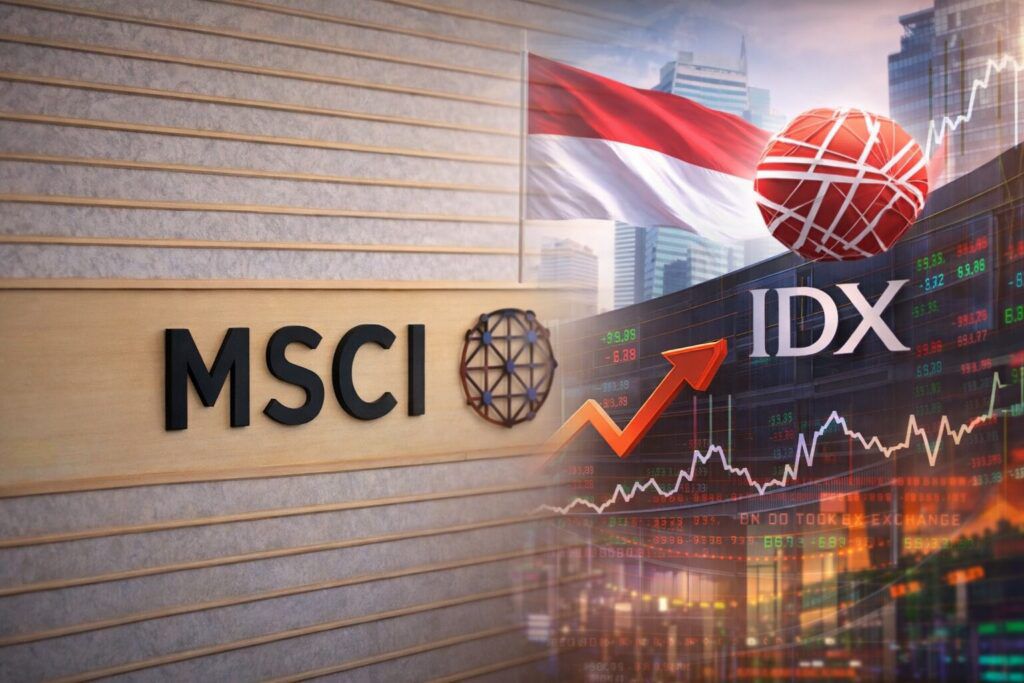
MSCI emphasized that the move represents a warning shot rather than a final vedict. However, market risk has risen as Indonesia will be reassessed in May, and failure to address transparency and free-float concerns could result in a reduction of Indonesia’s weight in the MSCI Emerging Markets Index or, in a more extreme scenario, a downgrade from Emerging Market to Frontier Market status. Under such circumstances, selling pressure would likely be concentrated in large-cap stocks with the highest MSCI weights, as passive global funds would be forced to rebalance, potentially accelerating capital outflows.
Market reaction so far reflects these concerns. Foreign flows have turned negative after a prolonged inflow period, with the heaviest pressure seen in stocks expected to carry meaningful MSCI exposure. This reinforces the view that current volatility is primarily flow-driven and index-related, rather than stemming from weakening operational performance.
.jpeg)
That said, the MSCI-related pressure is viewed as temporary and reinforces the case for selective positioning. Stocks with strong fundamentals remain the preferred focus, particularly within the banking sector, which continues to stand out for its ample liquidity, resilient asset quality, and stable profitability. While large-cap banks also carry significant weights within the MSCI framework and may not be immune to near-term flow-driven volatility, they remain fundamentally sound and well-positioned relative to other index-heavy names. As MSCI-driven pressure and foreign outflows begin to ease, the banking sector could emerge as a rational entry point, benefiting from valuation dislocations driven by technical factors rather than fundamental deterioration.