
Indonesia’s equity market remains under pressure, with the IHSG briefly falling below the psychological 5,000 level on October 30 before closing at approximately 5,057. Beyond the broader market correction, the removal of 81 High Shareholding Concentration (HSC) stocks from the index starting November 2 will reshape its composition. The combined weight of the four major banks is estimated to increase from 24.33% to 27.45%, making BBCA, BBRI, BMRI, and BBNI increasingly influential in determining the index’s direction. This adjustment also places greater emphasis on the performance of liquid large-cap stocks in shaping overall market movements.
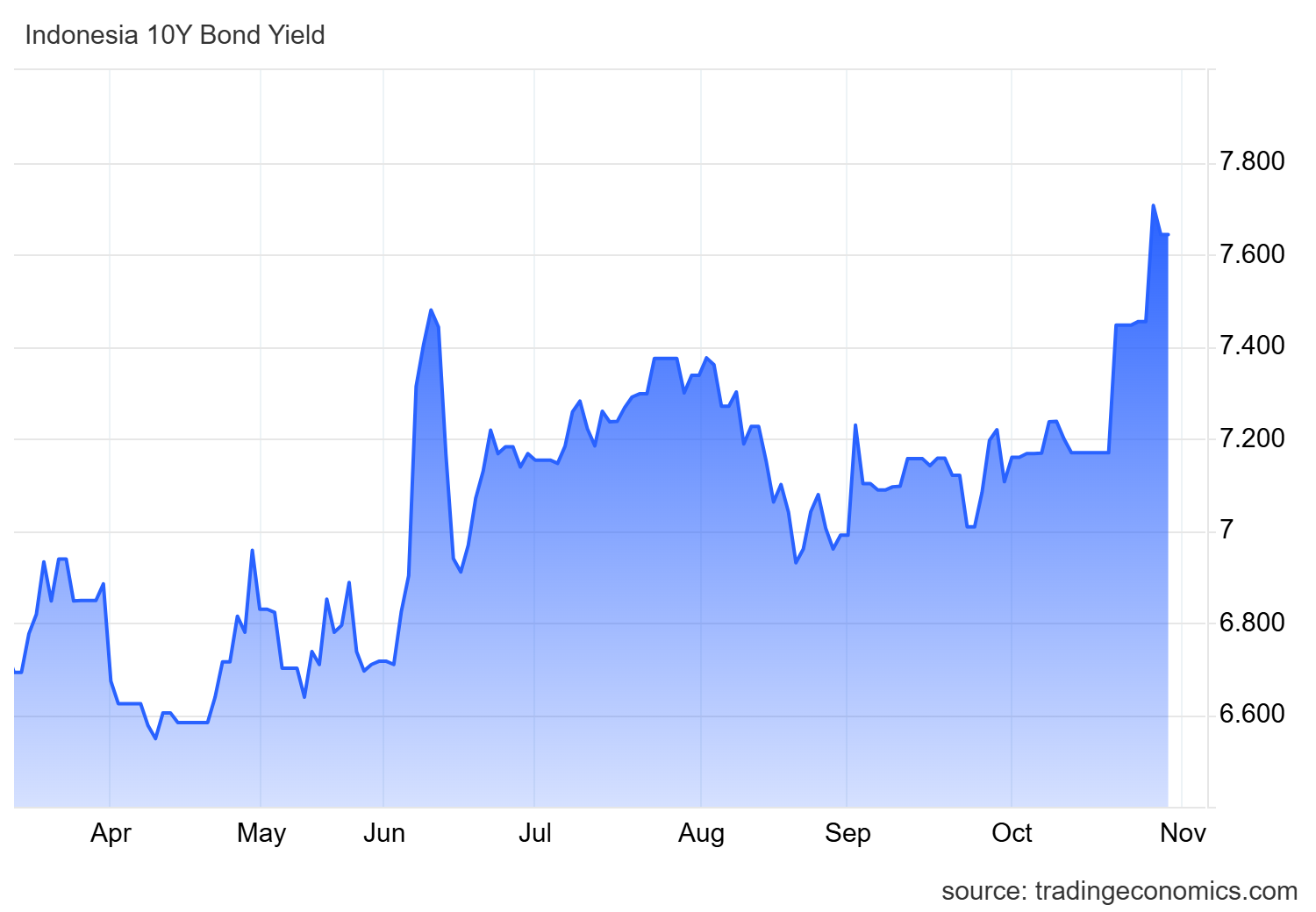
Pressure in the bond and currency markets remains an important signal to monitor. Indonesia’s 10-year SBN yield eased from its recent peak of 7.70% on October 28 to approximately 7.64% on October 30, while incoming bids at the October 27 SUN auction dropped 52.1% to Rp31.09tn, reflecting weaker investor demand. Meanwhile, the rupiah remained under pressure, with USD/IDR trading Rp18,127 as of November 1, significantly weaker than the 2026 state budget assumption of Rp16,500/USD. The combination of elevated yields, weaker auction demand, and currency depreciation raises concerns over whether investors are demanding a higher risk premium to hold Indonesian assets, rather than simply reacting to short-term market volatility.
The interaction between equity weakness, elevated bond yields, weaker auction demand, and rupiah depreciation points to increasing risk concerns surrounding Indonesian assets. While these developments may indicate a higher risk premium, it remains important to assess whether the pressure reflects a sustained repricing of risk or temporary market volatility.
We maintain a cautious outlook toward Indonesian equities, as attractive valuations alone are not yet sufficient to confirm a sustainable recovery. Stabilization in the rupiah, a meaningful decline in SBN yields, and moderation in foreign selling would provide stronger signals of improving investor confidence. Until these conditions materialize, a wait-and-see approach remains warranted, with investors advised to avoid aggressive positioning while cross-asset volatility persists.