04 May 2026
The Black Gold of Indonesia
Market Commentary
0 comments

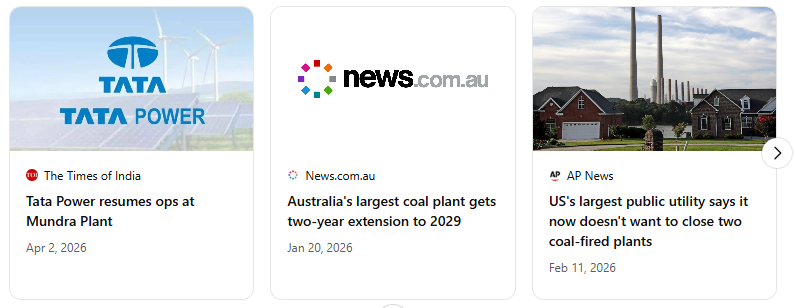
The recent wave of coal plant extensions and reactivations globally reinforces a clear narrative: coal is not structurally returning, but energy security is forcing a cyclical extension of demand. In the U.S., utilities have reversed closure plans for major plants due to rising electricity demand, including from data centers , while emergency orders have also forced plants to remain operational to avoid power shortages.
In Asia, India’s Mundra plant has resumed operations after shutdown, enabled by new pricing mechanisms that pass through coal costs —a critical signal that coal-fired generation remains economically viable when tariffs adjust. Meanwhile, Australia extended its largest coal plant (Eraring) to 2029 due to delays in renewable rollout , and even Indonesia itself is reconsidering early retirement of certain coal assets such as Cirebon-1 . The common thread is clear: grid reliability, cost pass-through, and energy transition delays are sustaining coal demand longer than expected.
This environment is incrementally positive—but not structurally bullish—for Indonesian coal exporters. Indonesia remains a key supplier to India, China, and Southeast Asia, where many plants—particularly subcritical and blended systems—are compatible with Indonesia’s low-to-mid GAR coal. The restart of India’s Mundra plant is particularly relevant, as it explicitly depends on imported Indonesian coal pricing dynamics, highlighting Indonesia’s role as a marginal supplier in balancing plant economics.
Similarly, Australia’s extension reflects broader Asia-Pacific tightness in dispatchable baseload power, indirectly supporting seaborne coal demand. However, this demand is cyclical and policy-driven, not a structural upcycle, especially as large consumers like China and India continue to expand domestic coal production, capping long-term import growth.
Coal (white), AADI (blue), and ITMG (orange) performance comparison
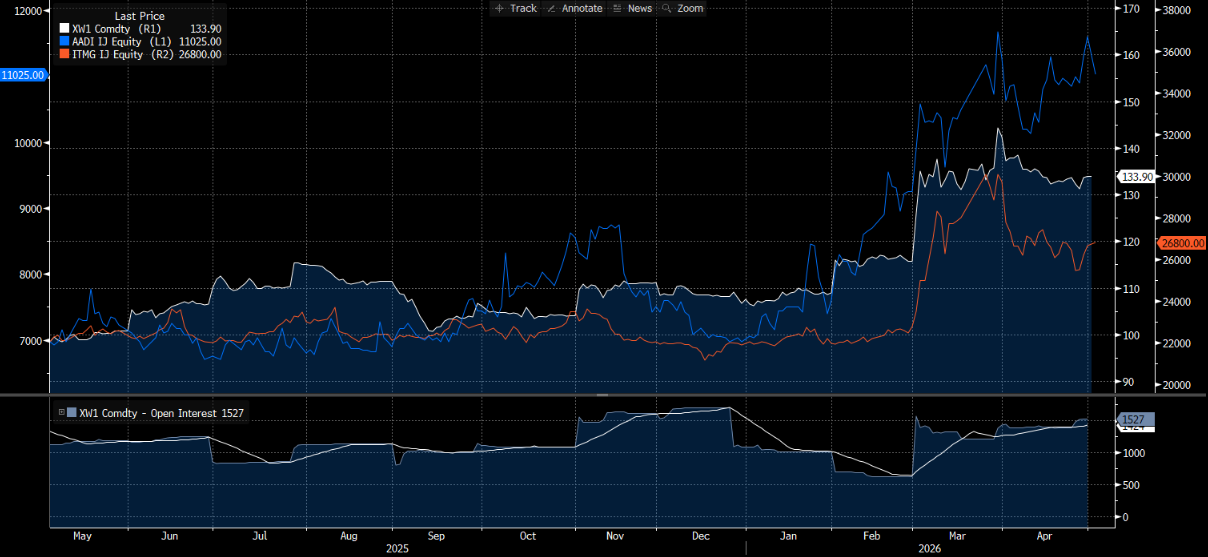
Overall, the investment implication is that coal remains a tactical trade rather than a structural theme. The recent global developments support near-term demand visibility and pricing resilience—particularly into Asia—but the upside is constrained by supply normalization and energy transition policies. Therefore, we recommend buying AADI as our top pick for strong coal fundamentals, while INDY is preferred as a momentum play given its high sensitivity to movements in coal prices.
In Asia, India’s Mundra plant has resumed operations after shutdown, enabled by new pricing mechanisms that pass through coal costs —a critical signal that coal-fired generation remains economically viable when tariffs adjust. Meanwhile, Australia extended its largest coal plant (Eraring) to 2029 due to delays in renewable rollout , and even Indonesia itself is reconsidering early retirement of certain coal assets such as Cirebon-1 . The common thread is clear: grid reliability, cost pass-through, and energy transition delays are sustaining coal demand longer than expected.
This environment is incrementally positive—but not structurally bullish—for Indonesian coal exporters. Indonesia remains a key supplier to India, China, and Southeast Asia, where many plants—particularly subcritical and blended systems—are compatible with Indonesia’s low-to-mid GAR coal. The restart of India’s Mundra plant is particularly relevant, as it explicitly depends on imported Indonesian coal pricing dynamics, highlighting Indonesia’s role as a marginal supplier in balancing plant economics.
Similarly, Australia’s extension reflects broader Asia-Pacific tightness in dispatchable baseload power, indirectly supporting seaborne coal demand. However, this demand is cyclical and policy-driven, not a structural upcycle, especially as large consumers like China and India continue to expand domestic coal production, capping long-term import growth.
Coal (white), AADI (blue), and ITMG (orange) performance comparison
Overall, the investment implication is that coal remains a tactical trade rather than a structural theme. The recent global developments support near-term demand visibility and pricing resilience—particularly into Asia—but the upside is constrained by supply normalization and energy transition policies. Therefore, we recommend buying AADI as our top pick for strong coal fundamentals, while INDY is preferred as a momentum play given its high sensitivity to movements in coal prices.
Written by Boris, the Broker
Comments