
Destry Damayanti's first full RDG as Acting Governor delivered a hold on the BI-Rate at 5.75%, in line with both our expectations and consensus. The Deposit Facility and Lending Facility were also kept unchanged at 4.75% and 6.50%, respectively. The rupiah traded defensively ahead of the decision, hovering around Rp17,840–17,900/US$, reflecting continued caution over currency stability. This concern is also reflected in BI's balance sheet, with BI debt rising 55.7% YoY in 2Q26 alongside a 4.96% rupiah depreciation, highlighting the ongoing cost of managing FX pressure through SRBI and related instruments.
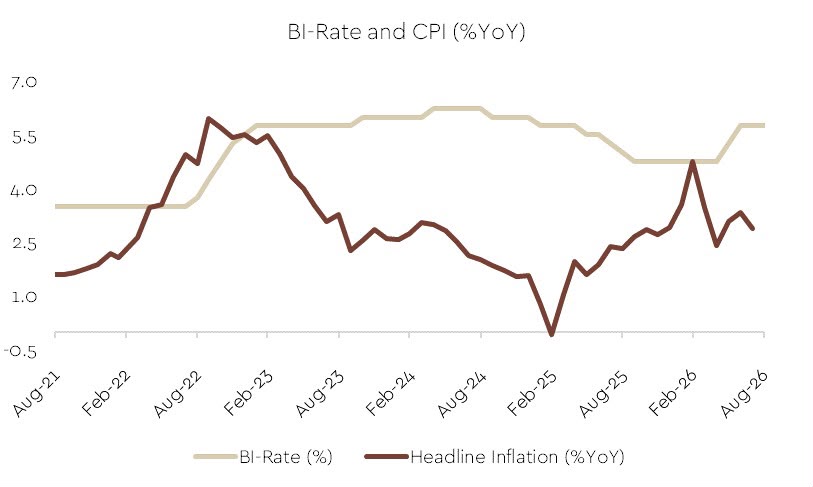
Meanwhile, credit growth continued to accelerate, reaching 13.58% YoY in July from 12.67% in June and moving comfortably above BI's 8–12% target range for 2026. This suggests monetary transmission into the banking system is gaining traction, allowing BI to maintain rates while shifting its focus toward managing liquidity and the rupiah. Rather than relying on the policy rate, BI is expanding its hedging-swap incentive, offering a 12.5% premium reduction on Hedging Sell Swaps not only for portfolio inflows but also for offshore bank loans and FDI, effective from the second week of September for funds received from July 1 onward. The swaps can run for up to 12 months and remain extendable within a three-year contract window.
We view the policy move as a clear signal that BI is prioritizing currency and financial stability over additional monetary tightening. By making it cheaper to hedge USD proceeds from foreign loans and FDI, the new incentive should encourage banks and corporates to convert more foreign currency into rupiah rather than retain USD exposure. Greater conversion flows could help ease liquidity conditions and, in turn, reduce the elevated SRBI yield premium over government bonds, providing a constructive backdrop for the bond market. With credit growth already gaining momentum and the hedging mechanism providing an additional tool to manage FX pressure, we do not expect BI to raise SRBI rates from here and continue to expect the BI-Rate to remain on hold, with rupiah stability likely to remain the key priority behind an otherwise accommodative policy stance.